1. Define the saleable product before defining the Chinese market
A shipment of bare insulating rods, a suspension-insulator assembly and a hollow housing for electrical equipment are three different transactions. Their customers, manufacturing steps, acceptance evidence and revenue per unit differ. A market study that groups them together may describe a broad industrial ecosystem, but it cannot support a core-rod sales forecast or a comparison of finished-insulator quotations. This report follows the boundary of the product being sold, then connects it to the Chinese manufacturers and project channels that buy it.
No reliable public national revenue or tonnage total specifically covering Chinese composite insulators or insulating core rods was established in this research. We therefore do not publish a national market share, a forecast CAGR or a top-ten supplier ranking. The evidence instead has three levels: surrounding grid investment, disclosed company product segments and documented manufacturing capabilities. Each answers a different question. Company accounts demonstrate realized business at named firms; they are neither a census of the industry nor a measure of all Chinese production.
The distinction matters when evaluating import substitution or material substitution. A procurement opportunity can move from porcelain to composite while total project spending stays unchanged, or a composite manufacturer can grow through a different product mix without selling more bare rods. Conversely, increased conductor capacity does not tell a buyer how many insulator strings will be installed. GetFRP's analytical unit is therefore a qualified product family attached to an identifiable customer and project stage. A credible opportunity register records both the intended application and the contractual item, rather than converting broad infrastructure spending into an arbitrary percentage for FRP.
2. Grid investment supports opportunity screening, not automatic order conversion
China Electricity Council's 2026 annual development report records RMB 639.5 billion of completed grid-engineering investment in 2025, up 5.1%. Distribution at 110 kV and below accounted for RMB 323.7 billion, or 50.6% of the total. The National Energy Administration reported RMB 608.3 billion for national grid engineering in 2024. These are observed infrastructure measures, not insulation purchases. [S17][S1]
Different announcements describe different scopes: State Grid's early-2025 statement anticipated investment exceeding RMB 650 billion, while China Southern Power Grid announced planned fixed-asset investment of RMB 180 billion for 2026. Both are company plans, and their coverage extends beyond insulator procurement. They should not be added to the national series or treated as completed spending. [S3][S2] The sizeable distribution category also cautions against discussing China's opportunity only through headline ultra-high-voltage projects; identifying the actual equipment and buying channel remains necessary. [S17]
For commercial planning, divide the demand route into line construction, substation equipment and replacement work. A line package may involve suspension or tension assemblies, post supports and associated fittings. An equipment OEM may buy a hollow housing as an input to a larger qualified apparatus. Maintenance purchasing can be governed by an existing asset design and approved replacement list. The same province or utility can therefore generate several buying processes, each with a different technical gate and a different opportunity for an upstream FRP producer.
Track project maturity before assigning a probability to revenue. A policy or investment announcement identifies an area to investigate. A released specification identifies the intended function and standards. Vendor qualification creates eligibility, while a purchase order establishes quantities and delivery obligations. These stages should remain separate in the sales pipeline. For a Chinese exporter, an overseas EPC's enquiry also requires identification of the ultimate utility or equipment owner: an intermediary's willingness to purchase does not settle the end user's technical acceptance.
The practical research question is where the proposed supplier can enter that chain. A rod producer may sell to an established insulator manufacturer without becoming the utility's direct vendor. A finished-assembly supplier must control more interfaces and support a broader evidence package. A hollow-housing manufacturer may face an equipment OEM's development cycle and integration tests. Our judgment is that matching the entry point to the supplier's actual responsibility is more useful than selecting an application solely because its surrounding capital budget is large.
↔ Scroll horizontally to see the full chart and data table.
Source: [S1][S17]. 2024: NEA; 2025: CEC annual development report, reproduced by the official CCPIT Electric Power Industry Committee. Original RMB hundred-million figures divided by 10. Growth 639.5 / 608.3 - 1 = 5.13%, consistent with the reported rounded 5.1%. Not insulator revenue.
View the chart data and evidence
| Series | Category | Value | Unit | Evidence / value basis | Reported range | Point note |
|---|---|---|---|---|---|---|
| — | 2024 | 608.3 | bn | Statistic | — | — |
| — | 2025 | 639.5 | bn | Statistic | — | — |
| Demand route | Likely technical buyer | Evidence needed before forecasting sales |
|---|---|---|
| New overhead line | Utility / design institute / EPC | Released assembly specification, quantities, load duty and qualification route |
| Substation equipment | Transformer, switchgear or other equipment OEM | Housing interfaces, apparatus duty and integration responsibility |
| Replacement program | Asset owner / maintenance contractor | Installed configuration, interchangeability and approved replacement basis |
| Insulating core rods | Finished-insulator manufacturer | Controlled rod specification, process compatibility and batch acceptance |
Source: GetFRP commercial segmentation; macro context [S1][S2][S3]. These are procurement pathways, not measured market shares.
3. Listed-company evidence shows several product cycles, not one growth rate
Shemar's 2025 main-business disclosures separate substation external insulation, line external insulation and rubber seals. The first category grew 41.43%, while the line category fell 19.30%; their gross margins were 48.67% and 14.00%, respectively. The chart preserves those business labels. [S4] These differences challenge a simple claim that all Chinese composite-insulation products are expanding at the same pace. They also show why an issuer's overall growth cannot be assigned to FRP core rods.
Dalian Insulator provides a second, different observation: composite insulators accounted for 10.62% of its 2025 group revenue, calculated from the reported categories below. Porcelain suspension insulators were much larger at that company. [S5] This is an issuer mix, not the Chinese material split. Comparing the two companies' total sales would blur their portfolios; comparing their segment margins as if they were interchangeable factories would also ignore differences in products, customers, accounting and operations.
The latest partial period adds a useful caution. Shemar reported unaudited January–September 2026 revenue of RMB 1,331.1 million, up 14.43% year on year, but third-quarter revenue alone was RMB 436.6 million, down 4.83%. [S6] Both observations can be true. Nine-month revenue should not be compared with a previous full year as a growth rate, or multiplied into a forecast without a defensible seasonal model.
GetFRP's interpretation is that supplier evaluation should examine the business relevant to the order. Request comparable product-family sales, production loading, delivery history and investment commitments, with explicit definitions. A growing group may still be reorganizing the line that will manufacture the proposed product. A smaller specialist may have relevant process experience but limited engineering support. Neither conclusion follows from revenue alone. The accounts provide questions for due diligence; plant and project evidence determine whether the supplier can answer them.
↔ Scroll horizontally to see the full chart and data table.
Source: [S4]. Main-business total RMB 1,682.369m; excludes RMB 38.330m of other revenue. Line category includes crossarms and other line insulation. Rubber seals are shown separately and are not insulator sales. No standalone core-rod revenue is disclosed here.
View the chart data and evidence
| Series | Category | Value | Unit | Evidence / value basis | Reported range | Point note |
|---|---|---|---|---|---|---|
| — | Substation external insulation | 1243.51748196 | RMB m | Company data | — | — |
| — | Rubber seals | 269.88619478 | RMB m | Company data | — | — |
| — | Line external insulation | 168.96523082 | RMB m | Company data | — | — |
↔ Scroll horizontally to see the full chart and data table.
Source: [S5]. Group total RMB 1,779.045m. Composite share = 189.00444228 / 1779.04496365 = 10.62%. The separately reported post category is not relabeled as composite. Issuer categories, not national market shares.
View the chart data and evidence
| Series | Category | Value | Unit | Evidence / value basis | Reported range | Point note |
|---|---|---|---|---|---|---|
| — | Porcelain suspension | 1473.26795952 | RMB m | Company data | — | — |
| — | Composite insulators | 189.00444228 | RMB m | Company data | — | — |
| — | Post insulators | 65.28482235 | RMB m | Company data | — | — |
| — | Other | 51.4877395 | RMB m | Company data | — | — |
4. Map Chinese capabilities from rod production to assembled insulation
The supply chain is broader than the finished-insulator brands visible in a utility tender. Shaanxi Taporel's official product material identifies epoxy/glass insulating rods and vacuum-injection pultrusion. Nanjing Electric's composite-insulator page describes finished suspension, post and crossarm products together with silicone processing, injection molding and crimping equipment. These sources establish different manufacturing activities; they do not independently prove the qualification of an offered batch or every advertised rating. [S7][S8]
A useful supplier map distinguishes material production, pultrusion, housing manufacture, metal fittings and final assembly. A vertically integrated bidder should explain which operations occur at the proposed plant. A specialist using subcontractors should identify those parties and the controls applied to them. Neither model is automatically superior. The commercial concern is whether a change in resin, rod source, fitting or manufacturing location can occur without review, and whether the manufacturer can trace the shipped assembly back through the actual production chain.
Avoid comparing factory line counts with catalogue capacity or piece counts from another manufacturer. A short small-diameter rod and a long large-section component consume different process time and materials. Finished assemblies also require downstream operations and tests. Request demonstrated output for the offered family, supported by production records and accepted deliveries, rather than inferring available capacity from a photograph of pultrusion machines. The most relevant capacity is the quantity that can pass the agreed acceptance route within the required delivery period.
These distinctions also shape the export proposition. An upstream rod supplier competes on a controlled material/process combination and compatibility with the customer's assembly process. A completed-insulator supplier takes responsibility for the coordinated rod, housing, fittings and associated evidence. A hollow-housing supplier must support interfaces with the equipment manufacturer. The table is a set of documented examples for further investigation, not a shortlist endorsed by GetFRP or a ranking of Chinese market positions.
| Company | Documented public scope | Order-specific verification |
|---|---|---|
| Shemar | Station and line external-insulation categories [S4] | Exact family, manufacturing site, qualification and equipment interfaces |
| Dalian Insulator | Separately reported porcelain and composite businesses [S5] | Offered construction, current reports and plant responsibility |
| Shaanxi Taporel | Epoxy/glass core rods; injection pultrusion [S7] | Material identity, cure/process controls and downstream compatibility |
| Nanjing Electric | Finished composite insulators and assembly operations [S8] | Applicable geometry, end fittings, housing and test coverage |
Source: Issuer filings and manufacturer declarations [S4][S5][S7][S8]; not capacity or market-share rankings.
5. Solid rods, line posts and hollow housings require different engineering
The published scope of IEC 61109 describes suspension and tension composite insulators with a solid cylindrical fiber/resin core, polymer housing and permanent metal end fittings. IEC 61952 addresses composite line posts, while IEC 61462 addresses hollow composite insulators for electrical equipment. [S9][S11][S13] These are useful product boundaries before any calculation begins. A similar-looking silicone surface does not identify the hidden load-bearing structure or establish which test program applies.
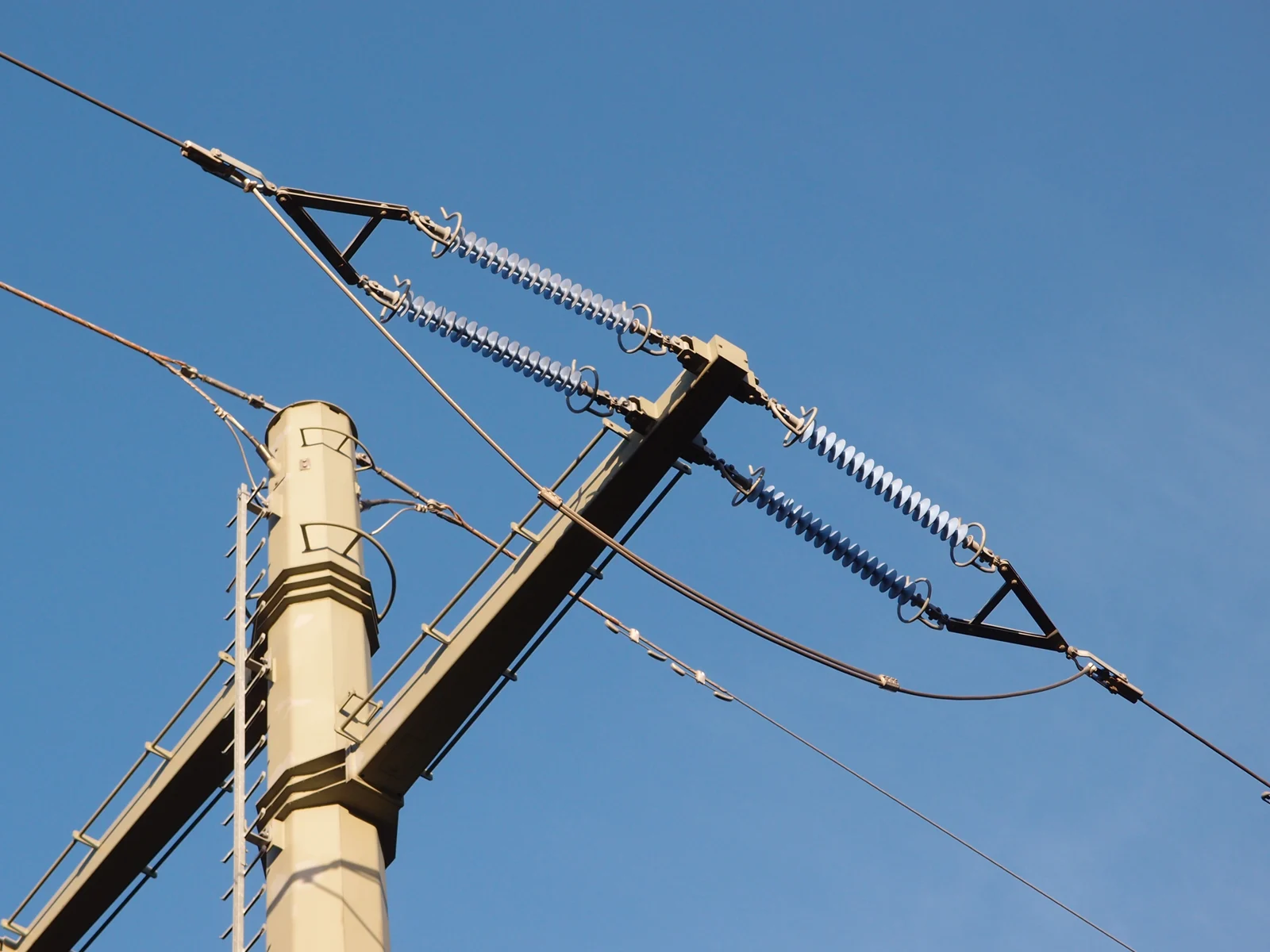
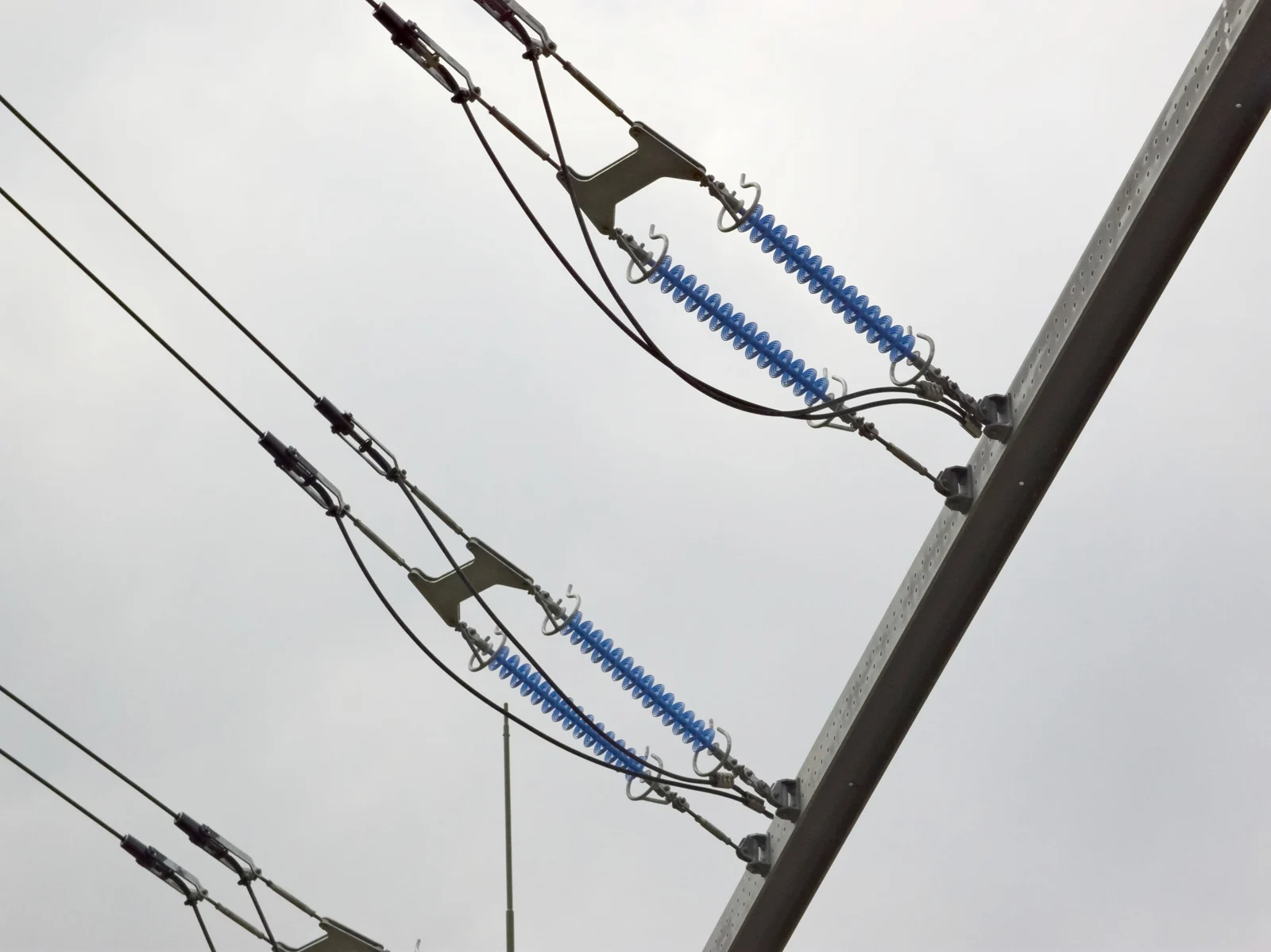
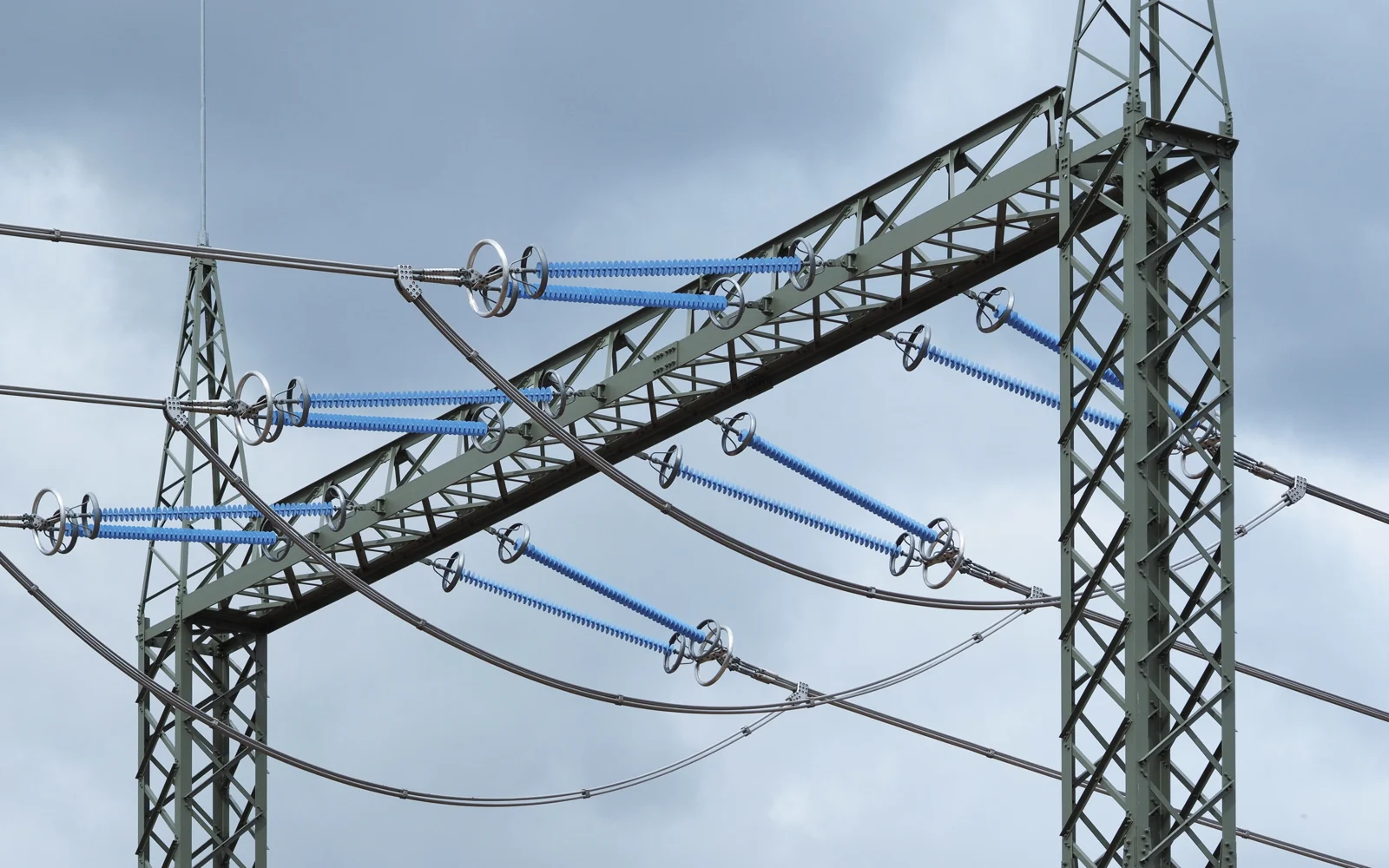
For a tension assembly, the rod and end-fitting load transfer must be considered together. For a line post, bending and the installed arrangement require attention; combined loading may matter. A hollow housing has a tube and equipment interfaces, with pressure conditions where applicable. The original diagram separates these families without assigning a universal voltage, wall thickness or load rating. Photographs elsewhere in the report illustrate visible silicone assemblies only; they cannot demonstrate the construction or acceptance of a Chinese supplier's product.
The initial RFQ should include a drawing identifying the contractual boundary. State whether the purchase includes a bare core, a housed element, end fittings, field-control accessories or an integrated assembly. Identify the party responsible for each mating interface and provide the service environment and electrical/mechanical duty. This prevents a quotation for one manufacturing stage from being compared with a quotation for a complete system. It also makes exclusions visible before price negotiations make a technically incomplete offer appear attractive.
The same discipline applies to prototypes. A laboratory result on an unassembled rod answers a material or component question under the stated conditions. An assembly result answers a different question involving its particular construction. Neither should be relabeled to suggest evidence for a different family. Qualification is most useful when the report, drawing and supplied item can be connected without relying on an informal explanation after delivery.
↔ Scroll horizontally to see the full diagram.
6. Specify the edition and product scope, including the 2025 IEC revisions
At the research cut-off, IEC 61109:2025 and IEC 62217:2025 were published third editions. The former covers the suspension/tension product family, including its stated AC and DC scope; the latter provides common definitions, design tests and criteria used through the relevant product standard. IEC 62217 is not a universal stand-alone rating for every polymeric insulator. [S9][S10] An undated claim of compliance is therefore insufficient to establish which requirements were actually assessed.
The line-post references need particular care. IEC 61952:2008 remains the published test and acceptance reference identified here. IEC 61952-1:2019 concerns definitions, end fittings and designations, including dimensional interchangeability; its later date does not make it a replacement for the earlier test standard. [S11][S12] For hollow equipment insulators, the relevant published reference is IEC 61462:2023. [S13] A supplier should identify the standard applicable to the offered construction, not simply list the newest year visible in a catalogue.
China's official catalogue lists GB/T 19519-2014 as current for suspension and tension composite insulators in its specified AC scope. [S15] This report does not assert that the domestic edition is identical to IEC 61109:2025. A project requiring a particular IEC edition needs a clause-based assessment against that contract, even when the manufacturer already holds useful domestic test evidence. Existing reports may support part of the review, but their scope and differences must be evaluated explicitly.
Use a compliance matrix linking every contractual requirement to a controlled drawing, report, calculation or agreed deviation. Record the issuing laboratory, report date, sample construction and applicability to the order. Public standards abstracts are sufficient for identifying the right family and edition; they do not replace the full documents needed for execution. If a standard revision changes relevant tests or definitions, determine the effect on the proposed product before committing to a delivery date that assumes no additional qualification.
| Reference | Purpose | Important boundary |
|---|---|---|
| IEC 61109:2025 [S9] | Composite suspension / tension insulators | Solid-core assembly; stated AC >1,000 V and DC >1,500 V scope |
| IEC 62217:2025 [S10] | Common polymeric-insulator design tests and criteria | Apply through the relevant product standard |
| IEC 61952:2008 [S11] | Composite line-post tests and acceptance | Do not replace with a dimensions-only document |
| IEC 61952-1:2019 [S12] | Line-post end fittings and designation | Distinct role from the test / acceptance standard |
| IEC 61462:2023 [S13] | Composite hollow equipment insulators | Tube-based family; pressurized or unpressurized applications |
| GB/T 19519-2014 [S15] | Chinese AC suspension / tension product standard | Current domestic catalogue entry; no equivalence assumed here |
Source: Official IEC and Chinese national-standard catalogues [S9][S10][S11][S12][S13][S15]. Edition status and scope, not reproduced test procedures.
7. Evaluate the interfaces that a rod datasheet cannot describe
A credible material specification is necessary, but it cannot establish the service performance of an entire insulator. IEC TR 62039 explicitly treats polymeric material selection as only part of that problem; design and environment also matter. [S14] The buyer should therefore examine the route from the core surface to the housing, the sealing region and the fittings. Asking only for the highest tensile-strength number leaves several parts of the actual assembly undefined.
IEC 61109:2025 and IEC 62217:2025 address core, housing and interface issues, including stress corrosion and water-diffusion-related testing within their respective frameworks. [S9][S10] IEC TR 62662 focuses on brittle-fracture risk for composite insulators mainly subjected to tensile loading. [S16] These references support a system-level review. They do not justify assuming that an acid-resistant glass label, an epoxy label or a good result from one isolated coupon eliminates every possible failure mechanism.
For procurement, ask how the manufacturer controls surface preparation, contamination, housing application, sealing and end-fitting attachment, and how those controls are connected to the qualified construction. Request the allowed process window and the response to a deviation, without prescribing a universal crimp pressure or cure temperature in the RFQ. Those settings depend on the product and equipment. A polished external surface does not reveal an internal processing defect, while an attractive test certificate may refer to a construction that is no longer produced.
WACKER's technical material describes silicone systems for long-rod and hollow insulators and identifies hydrophobicity transfer and tracking/erosion resistance as relevant properties. It also distinguishes housings from coatings applied to existing glass or ceramic insulation. [S18] These are different product and process choices. A coating claim cannot simply be transferred to a molded housing, and material hydrophobicity does not establish the required creepage distance or complete-insulator service life.
Require the supplier to explain the housing and interface evidence for the actual pollution, wetting and electrical duty. In particular, agree whether a compound, primer, rod-source or fitting-process substitution changes the qualified construction. Treating such changes as routine purchasing decisions can disconnect production from the evidence used to approve it. This is a useful point of differentiation for a supplier that can document its process and change history, rather than competing only through a nominal material label.
A material name is a starting point
Specify the exact qualified material and assembly construction. An ECR glass description is not an unlimited chemical-resistance guarantee, and a silicone housing is not a universal creepage or service-life allowance. Require evidence for the relevant duty and interfaces; do not infer an assembly rating from ingredient names.
8. Rod diameter affects nominal stress, but it does not determine the rating
A simple geometric comparison helps explain why tension and post applications cannot be priced by diameter alone. For an ideal solid circular section, area is pi times diameter squared divided by four. Under the same axial force, nominal stress therefore varies with the inverse square of diameter. Under the same bending moment, the nominal outer-fiber stress from the section modulus varies with the inverse cube. The chart holds the applied force or moment constant and changes only diameter relative to a reference.
Increasing diameter by 20% reduces the illustrated nominal axial stress to 69.44% of its reference and the nominal bending stress to 57.87%. These are geometry ratios, not measured improvements in product capacity. They do not describe allowable orthotropic composite strength, end-fitting transfer, local stress concentrations, buckling, fatigue, moisture effects or electrical performance. Nor do they establish a specified mechanical load or a line-post load rating. Real assemblies need the applicable qualification and design evidence.
The procurement implication is to request the load case and installation arrangement before comparing rod mass or price. A supplier may offer a larger section, a different fiber/resin construction or a different fitting design, but the value of that change depends on the failure modes and acceptance basis. Conversely, reducing diameter to lower weight should not be justified by a generic material-strength number. GetFRP uses this illustration to make the missing assumptions visible, not to recommend a size or safety factor.
A meaningful technical comparison therefore keeps geometry, manufacturing construction and test scope together. Ask whether a report covers the proposed length and section, whether the fittings and housing are unchanged, and what assessment supports any extension of the evidence. The relationship between coupon properties and assembly behavior should be explained by the manufacturer and accepted by the responsible engineer, rather than reconstructed from unrelated catalogue maxima.
↔ Scroll horizontally to see the full chart and data table.
Source: GetFRP calculation from ideal solid-circle area and section modulus; not measured product data.. Reference diameter d0; unchanged force or moment. Nominal stresses: 4F/(pi d^2) and 32M/(pi d^3). No allowance for anisotropy, fittings, combined loads, stability, durability or electrical duty. Not a design rating.
View the chart data and evidence
| Series | Category | Value | Unit | Evidence / value basis | Reported range | Point note |
|---|---|---|---|---|---|---|
| Axial: (d0/d)^2 | 1.00x diameter | 100 | % | GetFRP estimate | — | — |
| Axial: (d0/d)^2 | 1.10x | 82.6446281 | % | GetFRP estimate | — | — |
| Axial: (d0/d)^2 | 1.20x | 69.4444444 | % | GetFRP estimate | — | — |
| Axial: (d0/d)^2 | 1.30x | 59.1715976 | % | GetFRP estimate | — | — |
| Bending: (d0/d)^3 | 1.00x diameter | 100 | % | GetFRP estimate | — | — |
| Bending: (d0/d)^3 | 1.10x | 75.1314801 | % | GetFRP estimate | — | — |
| Bending: (d0/d)^3 | 1.20x | 57.8703704 | % | GetFRP estimate | — | — |
| Bending: (d0/d)^3 | 1.30x | 45.5166136 | % | GetFRP estimate | — | — |
9. Connect qualification, production control and order acceptance
Qualification evidence is valuable only when the delivered item remains connected to the construction that was assessed. GetFRP recommends three linked records: a controlled product definition, a manufacturing history for the order and an acceptance record against the agreed requirements. The definition identifies materials, dimensions, interfaces and applicable reports. The manufacturing history identifies actual lots and process controls. Acceptance confirms the contractual checks on the supplied items. A certificate bearing a familiar standard number does not supply all three records by itself.
For a core-rod purchase, agree the properties and tests that the downstream insulator manufacturer needs, with sample preparation, conditioning, direction, units and acceptance criteria. For an assembled product, identify the relevant design, type, sample and routine evidence required by the governing documents. These categories have different purposes and should not be collapsed into a generic factory inspection. The exact program must follow the product and contract; this report does not prescribe a universal sampling frequency or acceptance limit.
Traceability should be usable in both directions. Starting with a shipped item or batch, the supplier should be able to retrieve the relevant material lots, manufacturing records and inspection results. Starting with a material or process deviation, it should be possible to identify affected deliveries. Agree how records will be retained and supplied, and what triggers customer notification. This is particularly useful when different firms produce the rod, fittings and final assembly, because the commercial chain can otherwise obscure the technical chain.
Before committing to serial supply, establish how changes are reviewed. A new resin supplier, revised housing formulation, alternative fitting or transferred production line may require further assessment even if the commercial description stays the same. The buyer should receive enough information to determine whether existing evidence remains applicable. Clear change control protects the value of qualification work and reduces the risk of discovering after shipment that the delivered construction differs from the approved sample.
| Layer | Record to request | Question it answers |
|---|---|---|
| Product definition | Controlled drawings, materials and evidence applicability matrix | What exact construction was evaluated? |
| Manufacturing | Lot identities, process controls and subcontractor responsibilities | How was this order made? |
| Acceptance | Contract-specific inspection / test results and disposition | Did the supplied order meet the agreed checks? |
| Change control | Approval procedure and affected-product traceability | Does the evidence remain applicable after a change? |
Source: GetFRP procurement framework; product and material qualification boundaries informed by [S9][S10][S11][S13][S14].
10. Compare accepted-unit cost at the same demand and technical duty
A lower unit quotation can be economically attractive only after both offers meet the same technical requirement. For a new source, the comparison may also include qualification expenditure, expected incoming acceptance and the quantity over which fixed costs are recovered. The following scenario isolates those effects. Every price, yield and fee is an invented input, not a Chinese market quotation or a claim about a named manufacturer. It assumes technically acceptable alternatives and a buyer who pays for rejected incoming units without reimbursement.
Let Q be the required number of accepted units, p the assumed landed purchase cost per unit, y the incoming acceptance yield and F the one-time qualification cost. Expected direct cost per accepted unit is p divided by y, plus F divided by Q. Using the table's assumptions, offer A costs USD 111.01 per accepted unit at Q equal to 1,000, compared with USD 136.91 for B. At 10,000 accepted units, the comparison reverses: USD 102.01 against USD 100.91.
The break-even demand is approximately 7,312 accepted units within the comparison period. This result follows from the selected assumptions, not from an industry rule that a second source becomes worthwhile at that volume. The model allocates the qualification fee once, buys enough units to meet accepted demand in expectation, applies no discounting and excludes service-failure costs. Incoming acceptance yield is not operating reliability and must never be interpreted as an acceptable field-failure rate.
Replace the scenario inputs with the actual commercial terms before making a decision. If the supplier replaces rejected items at its expense, the cost treatment changes; if qualification supports several future orders, the allocation changes. Add testing, logistics, working-capital and development-delay effects where material, with clear ownership of each cost. Procurement savings should then be assessed alongside delivery risk and technical acceptance, rather than using a low invoice price to compensate for an unresolved qualification gap.
↔ Scroll horizontally to see the full chart and data table.
Source: GetFRP scenario: p/y + F/Q, using the disclosed assumptions.. Same accepted demand Q. Break-even Q = (40,000 - 10,000) / (100/0.99 - 94/0.97) = 7,311.93. One comparison period, no discounting, no free replacement or recovery; not lifecycle cost, market pricing or service reliability.
View the chart data and evidence
| Series | Category | Value | Unit | Evidence / value basis | Reported range | Point note |
|---|---|---|---|---|---|---|
| Offer A | 1,000 accepted | 111.01010101 | USD | GetFRP estimate | — | — |
| Offer A | 5,000 accepted | 103.01010101 | USD | GetFRP estimate | — | — |
| Offer A | 10,000 accepted | 102.01010101 | USD | GetFRP estimate | — | — |
| Offer B | 1,000 accepted | 136.90721649 | USD | GetFRP estimate | — | — |
| Offer B | 5,000 accepted | 104.90721649 | USD | GetFRP estimate | — | — |
| Offer B | 10,000 accepted | 100.90721649 | USD | GetFRP estimate | — | — |
| Assumption | Offer A | Offer B |
|---|---|---|
| Landed purchase cost per unit | USD 100 | USD 94 |
| Incoming acceptance yield | 99% | 97% |
| One-time qualification fee | USD 10,000 | USD 40,000 |
| Rejected units | Buyer pays; no recovery | Buyer pays; no recovery |
| Technical duty | Same qualified function | Same qualified function |
Source: GetFRP hypothetical scenario. Yield differences are illustrative, not evidence that lower-priced suppliers have lower quality.
11. Prioritize a specific qualification route, then expand the product family
For a new supplier entering China-linked export channels, choose the customer whose approval process matches the capability being offered. A core-rod producer should establish compatibility with a finished-insulator manufacturer's controlled assembly process. A finished line-insulator exporter needs the ultimate utility's requirements and acceptance route, even when an EPC places the order. A hollow-housing producer should work through the equipment OEM's interface and integration requirements. Price the development work and qualification period explicitly; the accepted-volume scenario shows why a lower recurring price may need substantial demand to recover a larger entry cost.
The company evidence suggests where to investigate, rather than which segment to declare a winner. Shemar's station and line businesses moved in different directions in 2025, while Dalian's portfolio remained predominantly porcelain. A buyer should therefore ask for product-specific production loading and delivery evidence, rather than assume that a growing electrical group has spare capacity in every family. Track approved product families, accepted deliveries and repeat orders alongside enquiries. Those indicators can distinguish technical eligibility from commercial traction and help decide whether to extend an existing family or fund a separate qualification program.
Frequently asked questions
How large is China's composite-insulator market?
This research did not establish a reliable public national total for composite insulators or bare FRP core rods. Grid investment, company product revenue and factory capacity are different measures and should not be relabeled as a national TAM.
Is a core rod the same product as a composite insulator?
No. A rod is an upstream component. A finished solid-core insulator also includes its housing, fittings and interfaces, with assembly-level requirements. Hollow equipment insulators form another family. [S9][S13]
Which IEC editions should a new sourcing review check?
As of 8 November 2026, IEC 61109:2025 and IEC 62217:2025 are published. Line-post and hollow-equipment products need their own applicable references. Select the product standard and contractual edition before reviewing reports. [S9][S10][S11][S13]
Does IEC 61952-1:2019 replace IEC 61952:2008 testing?
No. The 2019 Part 1 concerns definitions, end fittings and designation. IEC 61952:2008 remains the published line-post test and acceptance reference identified in this review. [S11][S12]
Does a larger FRP rod automatically provide a higher insulator rating?
No. Diameter affects nominal geometric stress, but actual capacity also depends on construction, interfaces, loading and applicable qualification. The report's diameter chart is an illustration, not a product rating or sizing recommendation.
Can silicone or ECR glass descriptions replace qualification evidence?
No. Ingredient descriptions do not establish complete-insulator performance. Material selection, construction, interfaces and environment must be assessed for the intended duty. [S14]
How should buyers compare Chinese supplier quotations?
First align the qualified function, drawings, included components and evidence responsibilities. Then compare delivered accepted quantities, qualification expenditure and contractual treatment of rejected units. The report's cost scenario provides a transparent example, not a price benchmark.
Sources and scope
Figures were cross-checked against primary documents where available; secondary citations are marked in each scope note. Company figures are reported as disclosed by the companies themselves. This note is an independent market assessment and not investment advice.
- [S1]NEA: 2024 national electricity-industry statistics, 21 January 2025
Completed national grid-engineering investment of RMB 6,083 hundred million in 2024, up 15.3%; macro demand context.
- [S2]SASAC / China Southern Power Grid: 2026 investment plan, 21 January 2026
Company plan for RMB 180 billion of fixed-asset investment in 2026; not completed investment or insulator purchasing.
- [S3]SASAC / State Grid: 2025 investment plans, 16 January 2025
Expected company investment exceeding RMB 650 billion; different scope from national grid-engineering completed investment.
- [S4]Jiangsu Shemar Electric: 2025 annual report, SSE, 17 April 2026
Audited issuer accounts: main-business product categories, revenue and gross margins. Official filing identity verified through SSE; report text read from an issuer-report mirror.
- [S5]Dalian Insulator: 2025 annual report, SZSE, 23 April 2026
Audited issuer product revenue breakdown, printed page 28. Composite share calculated using group revenue; no national share inferred.
- [S6]Jiangsu Shemar Electric: 2026 third-quarter report, SSE, 29 October 2026
Unaudited nine-month and quarter-alone revenue, each compared with its corresponding prior-year period; no annualization.
- [S7]Shaanxi Taporel: FRP core-rod product and manufacturing description
Official manufacturer description of epoxy/glass insulating rods and vacuum-injection pultrusion; undated, accessed 8 November 2026. Not independent qualification evidence.
- [S8]Nanjing Electric: composite-insulator products and manufacturing
Official portfolio and manufacturing operations including silicone processing, injection molding and crimping; accessed 8 November 2026. Manufacturer declarations.
- [S9]IEC 61109:2025, edition 3
Published 26 February 2025: composite suspension and tension insulators; public scope and revision summary, not full standard text.
- [S10]IEC 62217:2025, edition 3
Published 6 October 2025: common polymeric-insulator definitions, tests and criteria, applied through product standards; public catalogue.
- [S11]IEC 61952:2008, edition 2
Composite line-post definitions, tests and acceptance; published status verified at the cut-off.
- [S12]IEC 61952-1:2019
Line-post definitions, end fittings and designation; distinct purpose from IEC 61952 test and acceptance requirements.
- [S13]IEC 61462:2023, edition 2
Composite hollow insulators for electrical equipment, including pressurized and unpressurized applications; published public scope.
- [S14]IEC TR 62039:2021: selection of polymeric insulating materials
Technical report on outdoor high-voltage material selection; material requirements alone do not guarantee service performance.
- [S15]SAMR national-standard catalogue: GB/T 19519-2014
Current Chinese suspension/tension composite-insulator standard for its stated AC scope. Status verified in the official catalogue; equivalence to IEC 61109:2025 is not asserted.
- [S16]IEC TR 62662:2010: brittle fracture of composite insulators
Published technical report on brittle-fracture risk and mitigation for insulators mainly under tensile loading; public catalogue scope.
- [S17]CEC: China Power Industry Annual Development Report 2026, official committee republication
CEC release of 14 July 2026 reproduced on 15 July by the CCPIT Electric Power Industry Committee. 2025 grid-engineering investment and distribution subset; CEC statistics, not NEA data.
- [S18]WACKER: silicones for the transmission and distribution industry
Primary material-manufacturer application guidance: silicone housings, coatings, hydrophobicity transfer and tracking/erosion resistance. Product claims are not independent assembly qualification.
Image provenance and usage terms appear in each caption; see image credits. Submit a source correction.